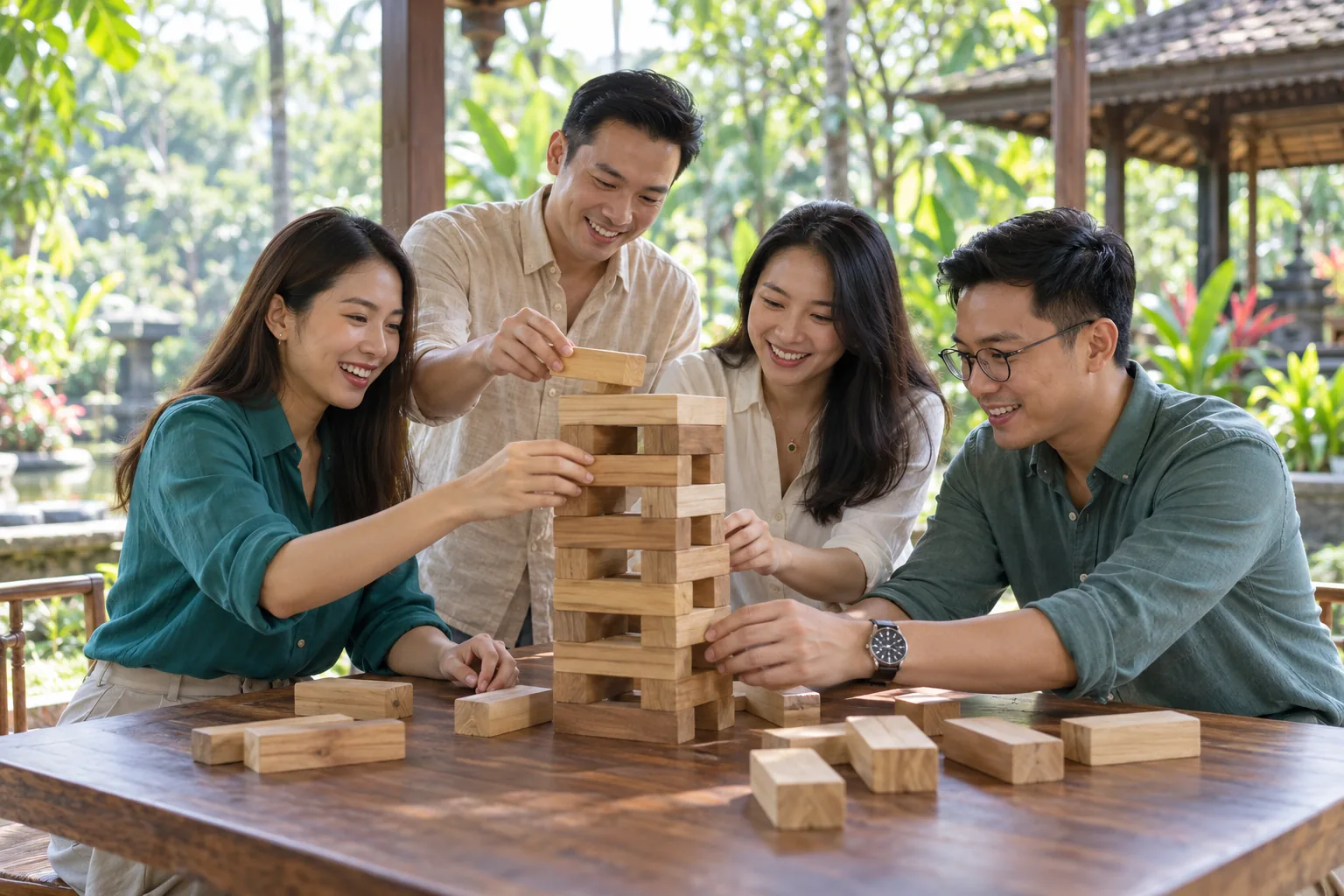
Employee engagement photography records an activity-led event: who took part, how people connected and what the programme looked like. It is different from staged staff portraits, which are a separate session. Start with the real programme, the attendee groups and where the images will be used, then choose coverage that respects participation, private time and families.
Engagement events are about people, not stages. Staff play games, share meals, learn each other's names and sometimes stay overnight together. The photographs that matter most from such an event are usually small: two colleagues laughing, a team cheering, a child on a parent's shoulders. This page helps employers commission that kind of record in a way that respects the people in it.
If your event is an awards dinner or anniversary instead, see our guide to company celebration and awards photography.
What does an engagement event record include?
It follows the programme and the people. The usual building blocks are:
- arrivals and the first conversations of the day;
- the opening, any welcome speech and housekeeping;
- the main activities, whether games, challenges, workshops or tours;
- meals and informal time;
- group moments, such as a team photograph, if the programme has room for one;
- the close and departures.
Not every event has all of these. A company picnic may have no stage, and a retreat may have a long residential stretch. We ask for your own programme rather than assuming a format.
Which occasions are in scope?
The details change with the occasion. The pages below look at each in turn.
- Corporate family days, where children and adults share the programme.
- Team-building sessions, led by a facilitator.
- Company retreats with both work and social time.
- Incentive trips, where part of the itinerary is a holiday.
- Outdoor team challenges and indoor games in limited space.
- Wellbeing days with optional participation.
- Remote employees meeting in person and newly combined departments.
Formal learning events belong with workplace communication and learning-event photography. Sporting or fitness events belong with recreation and fitness-event photography.
Activity coverage or staged portraits?
This is the first decision. Activity coverage follows the day as it happens, and our photographer moves around while people take part. Staged portraits take people out of the activity for a posed picture.
| Activity coverage | Staged portraits | |
|---|---|---|
| Purpose | Record participation and atmosphere | Produce posed, consistent images |
| How it runs | Our photographer follows the programme | A set time and place, people come to it |
| Effect on the event | Light | Takes people out of the activity |
| Typical use | Newsletter, recap, internal stories | Profiles, directories, team pages |
If you need both, plan them as separate parts of the day. Our guide to event coverage or a separate portrait session explains the trade-off.
Who should be involved in the decision?
Engagement events are often planned by a small committee, with input from HR, department heads and sometimes a staff representative. Photography decisions get lost when nobody owns them. Name one person who speaks for the organiser on photography, and agree who approves images before they are shared more widely.
If several teams or companies share the budget or the event, our guide to one event with several commissioning organisations shows how to settle the brief before the quotation.
What decides the quality of the record?
Three things matter more than equipment or style.
- Access. Our photographer needs to be where the activities are. At an outdoor venue, that means agreeing positions and safety rules with the activity provider.
- Timing. Staff arrive at different times, activities overrun and weather changes. A programme with a margin is easier to cover well.
- Participation. If people feel watched, they stop behaving naturally. A light touch and a clear message beforehand makes a difference.
Our guide to event photography run sheets, priorities and staffing explains what information helps most.
What about families, children and private time?
Many engagement events include family members. Children bring extra care: the organiser decides who supervises them, where photography is allowed and how parents are told. Supervising children stays with the organiser.
Residential retreats also have time that belongs to the employees, such as evenings, rooms and rest breaks. Decide what is outside the brief. Our guide to comfortable and inclusive event photography covers how to plan for different comfort levels.
What do you receive afterwards?
The deliverables are agreed in the quotation, not assumed. Most organisers want a selected gallery of edited photographs, sometimes grouped by activity, team or day so that departments can find their own images. Some also want a short set for quick internal use.
Decide who needs what: the HR team for a recap, department heads for their people, employees for themselves, families for their own photographs. Our guide to organising delivered photographs by session, activity or participant group explains how that structure is planned. Delivery timelines are stated in your quotation in writing.
What affects the cost?
Each quotation is written for the brief. The main factors are:
- the length of coverage and the number of days;
- the number of simultaneous activities or locations;
- travel, accommodation and venue access;
- the number of attendees and groups;
- deliverables, delivery speed and the number of photographers.
Our guide to event photography prices and quotation planning explains how to compare quotations fairly.
How do we plan and confirm engagement coverage?
We start with your programme and the purpose of the event. We ask what is missing: attendee groups, activity leaders, venue rules, private periods and the uses of the images. We propose a coverage plan and confirm the date, venue, crew, deliverables and quotation in writing.
Whether a second photographer, video or on-site editing can be included is something to ask us. We confirm what is possible for your date in writing.
What should you prepare before you enquire?
- The programme with times and locations.
- The number and type of attendees.
- Any activity provider or facilitator, with contact details.
- What the venue or provider has said about photography.
- The uses of the images, and who will approve them.
- Anything attendees have asked about being photographed.
The event photography brief builder helps you collect these in one place, and the photography responsibility planner shows who decides what.
Send us the programme and the attendee groups, and we will reply with a coverage plan and a written quotation for your event.
Checklist
- Write down the programme with real times, locations and activity leaders.
- Identify who attends: staff only, families, guests or day visitors.
- Decide the uses of the photographs: internal, recruitment, social media, report.
- Mark which periods are private or optional for employees.
- Name the person who can approve changes on the day.
- Ask the venue or activity provider about photography rules.
- Tell staff beforehand that our photographer will be present.
Share the activity programme, who is attending and how the company will use the photographs, and we will propose coverage in writing for your approval.
Get a quote for your retreatExplore: Family days and retreats
30 pages- Corporate family-day photography
- Team-building photos that show real teamwork
- Company retreat photos for work and free time
- Company incentive trip photography
- Photographing outdoor team challenges safely
- Photographing indoor staff games in small spaces
- Wellbeing day photos when joining is optional
- Photos of remote staff meeting colleagues in person
- Retreat photos for newly merged teams
- Photographing parents and children at family day
- Family day photos with grandparents and kids
- Family day fun running during the opening speeches
- Retreat group photo before people start leaving
- Photographing trust exercises without interrupting them
- Where photographers can work at kids' family-day activities
- Private times at overnight company retreats
- Photographing teams rotating through activity stations
- Can every family get a photo at family day?
- Retreat photos for culture stories and hiring
- Thanking sponsors in family day photos
- Photos for staff who skip the group games
- When rain moves your outdoor event indoors
- Retreat photos for day and overnight guests
- Company picnic photography without a stage
- Photographing supporters at staff adventure days
- Short team portrait slots during a busy family day
- Using last year's gaps to plan family day photos
- Sharing retreat photos with an outside facilitator
- Event photos when some staff prefer not to appear
- Photos of selected activities on short company outings
Common questions
How is this different from staff portraits or headshots?
Event coverage follows the programme and records people taking part. Portraits are a planned session where each person is posed and lit. The two serve different purposes and are quoted differently. If you need both, tell us and we plan them as separate blocks with their own time.
Do employees have to be photographed?
No. Participation in photography should be optional wherever possible. Tell employees that our photographer will attend and what the images are for, and ask us how people who prefer to stay out of frame can be accommodated during the activities.
Who decides what our photographer covers?
The organiser, usually HR, an events committee or a department head, with input from any activity provider or venue. Name one person with authority to answer questions on the day, so our photographer is not left waiting while an activity moves on.
Can we use the photographs for recruitment or social media?
Only if the quotation names those uses and the people shown have been told. Internal use, company websites, recruitment and advertising are different permissions. Decide the uses early so everyone knows what they agreed to.
What if the event runs across several days?
Tell us the dates, the sessions and the parts you want covered. A residential retreat usually has private time that stays outside the brief. We agree the coverage window for each day in writing and confirm the crew assigned to your event.
Get a quote for your retreat
Share the activity programme, who is attending and how the company will use the photographs, and we will propose coverage in writing for your approval.
What happens next: You send your event details on WhatsApp. Our team reads the brief, asks what is missing, then confirms in writing whether the date, venue and coverage can be booked, with a quotation. Opening WhatsApp does not send anything, and a message is not a booking until both sides confirm.
Last reviewed: