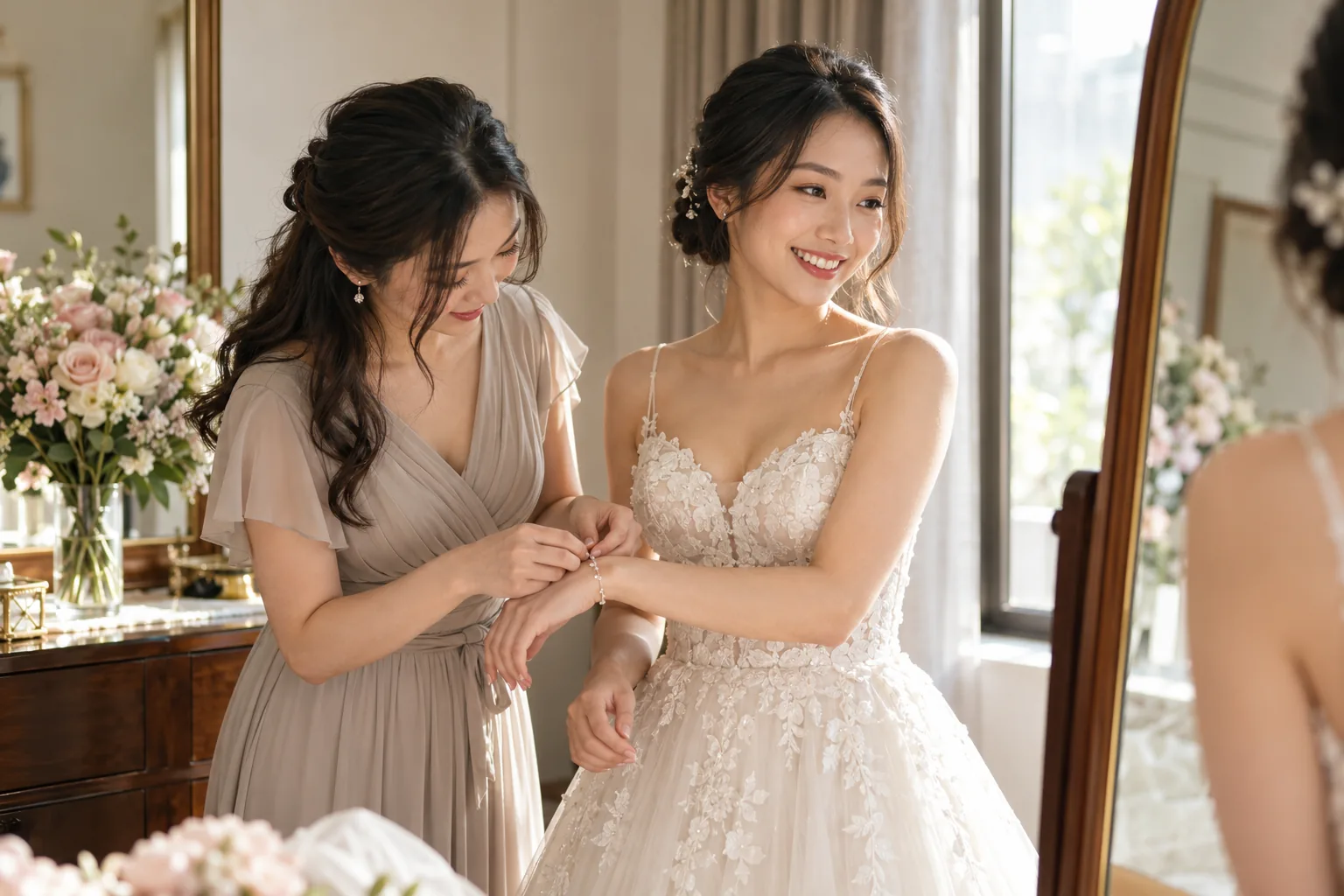
Preparation and portrait coverage work best when planned backwards from the ceremony start. Decide which preparation moments and which portraits matter, who may be present in private spaces, and how much time you are willing to spend away from guests. We then propose a realistic plan and confirm it in writing.
Preparation and portraits are the two parts of a wedding day that depend most on timing. They happen around the ceremony rather than inside it, so they only work when someone has counted the minutes. This page helps you decide what you want from each, and how to protect the day while getting it.
If you are still deciding how much of the day to cover, our guide to wedding photography coverage choices comes first.
Who usually plans this part of the wedding?
Most often it is the couple, sometimes with a parent or a sibling who is managing the morning. Wedding parties, family helpers and make-up artists also shape it, because they decide when people are ready and where they stand.
If someone other than the couple is arranging the photography, say so at the start. Our guide on booking photography on behalf of someone else explains how to keep the couple's wishes in front.
What counts as preparation coverage?
Preparation coverage records the hours before the ceremony. That can include hair and make-up, dressing, personal details such as rings, attire and invitations, parents helping, friends arriving and the last quiet minutes before leaving for the venue.
It does not mean every stage. A couple may want the final dressing and a blessing from a parent, but not the early make-up hours. Our team asks which of these you want before proposing arrival times, so you do not pay for a long morning that records little you care about.
Specific situations change the plan, and we have a page for each:
- Both partners preparing in different places
- Hair and make-up on the wedding morning
- Dressing and changing-space boundaries
- Preparation photographs with parents and grandparents
- When preparations finish much earlier than the ceremony
What counts as portrait coverage?
Portrait coverage means planned photographs of the couple, sometimes with the wedding party or family, taken at a time and place chosen for the purpose. It differs from candid ceremony coverage because someone has to stop and pose or walk.
Portraits can happen before the ceremony, between the ceremony and the reception, or after the celebration. Each window has a different cost in time and in guest attention. If you are still choosing between a longer portrait session and general coverage, see event coverage or a separate portrait session.
For a session at a separate location, our pre-wedding and couple-event guide covers the pre-wedding options.
How do you decide where portraits fit?
Portraits compete with three things: the ceremony start, the time guests wait, and the light. A simple way to think about it is to ask which of these you are least willing to give up.
| If your priority is | Then consider | Trade-off |
|---|---|---|
| Seeing each other before the ceremony | A private first look, see a first look before the ceremony | Needs time before guests arrive |
| Time with guests afterwards | Portraits before guests arrive, or a very short window later | Earlier start for you |
| Natural daylight | Portraits when the light is softer and the heat is lower | May not match the ceremony schedule |
| Resting between events | A short portrait block, or portraits on another day | Fewer varied images |
None of these is the right answer for everyone. The right choice is the one your family will be comfortable living with on the day.
How do you keep preparation private and calm?
The preparation room belongs to the people in it. Before the day, tell us who may be present, which stages may be photographed, and when we should step out. We follow those boundaries, and we ask that relatives and the make-up artist are told too.
Your helpers may be unsure what we need. A short note to them, explaining arrival time, who is where, and that photography may pause, usually settles most questions. For comfort and consent topics, see our guide to comfortable and inclusive event photography.
What does this do to coverage hours, crew and deliverables?
Preparation and portraits usually extend the start of the booking, and sometimes change the number of people needed. If both partners prepare at the same time in different places, one photographer cannot be in two rooms, which changes the crew. Our guide on production planning, run sheets and staffing explains how we think about this.
Deliverables follow the same logic. A longer morning produces more images of preparation, but the delivered gallery is a selection. The guide on how event photographs are selected describes how that works.
What drives the cost of this coverage?
Cost is driven by start time, total hours, travel between places, the number of photographers and the amount of editing. Your written quotation sets out the price for your brief, the coverage window and what is included. To compare offers, our guide to event photography prices and quotation planning lists what to check.
How do we plan it with you?
We read your brief and ask what is missing: locations, the ceremony start, the people in the preparation spaces, and your portrait priorities. We then propose coverage that fits, and confirm the date, venue, crew and deliverables in writing.
Before you contact us, it helps to have these ready:
- The ceremony start time and your guests' arrival time.
- The preparation address for each partner, and travel times to the venue.
- The names of the make-up artist and any venue contact, if you have them.
- The portrait locations you have in mind and whether the venue allows photography there.
- Anything private you would prefer not to be photographed.
You can use the event photography brief builder to gather these. Our priority photograph list builder turns your wishes into a list we can plan around.
What if the morning runs late?
Mornings rarely run to the minute. Agree a latest start time for the portrait window. Also agree a list of what is dropped first if the schedule slips, for example the second portrait location before the family blessing.
Share the list with your make-up artist and helpers, so everyone knows the order. We follow the list and tell you plainly if a planned image is no longer possible.
Send us your ranked list and your latest start time, and we will confirm the morning plan in writing.
Checklist
- Write down the ceremony start time and the time guests begin to arrive.
- List every preparation location with an address and an approximate travel time between them.
- Mark which preparation moments are must have, good to have or not wanted.
- Name the people allowed in private preparation spaces.
- Choose your portrait priorities: couple, wedding party, family or all three.
- Decide how much time you are willing to spend away from guests.
- Agree who tells relatives and the make-up artist that photography is planned.
Send us your preparation locations, your portrait priorities and the ceremony start time, and we will propose a preparation and portrait plan that fits the morning you actually have.
Get a quote for your morningExplore: Preparations and couple portraits
25 pages- Wedding morning photos when you get ready apart
- Wedding morning photos in a busy family home
- Wedding morning photos in a hotel room
- Wedding hair and makeup photos
- Photos of wedding outfits and family heirlooms
- Setting limits for wedding dressing photos
- Wedding morning photos with parents and grandparents
- Wedding morning photos with children
- Photographing wedding letters and private gifts
- Wedding party getting ready in different outfits
- Ready early for your wedding? Using the extra time
- First look photos before the wedding ceremony
- Private first look photos with family
- Wedding portraits before guests arrive
- Wedding portraits between ceremony and reception
- Wedding portraits at the end of the night
- Wedding portrait spots near your venue
- Wedding portraits with several clothing changes
- Wedding photos with your bridesmaids and groomsmen
- Wedding portraits when one partner needs seated options
- Including a pet in wedding photographs
- Wedding portraits with a newborn or young child
- Wedding portraits when rain or harsh sun hits
- Wedding portraits without leaving your guests behind
- Choosing which wedding morning photos to keep
Common questions
Do we need both preparation and portrait coverage?
No. Some couples want only the ceremony and a short portrait window, others want a full morning of preparation and little else. The two are separate decisions with different time costs, so choose each on its own merits and see how they fit before the ceremony.
How early should your photographer arrive on the wedding morning?
It depends on what you want recorded. If hair and make-up are the priority, arrival is set by the styling appointments. If only the final dressing and a family blessing matter, a much later arrival is enough. Your written plan states the arrival time agreed.
Can portraits be taken at a different place from the ceremony?
Often yes, if travel time, parking and the ceremony schedule allow it. Every move adds time and some risk of delay, so we ask for the exact place and a travel estimate before confirming it in the plan.
What if one of us dislikes being photographed?
Tell us early. Many people relax with light direction and short, well-planned sessions. We can reduce the portrait window, keep it candid, or focus on the moments you are most comfortable with.
Who decides which private moments are photographed?
You do. Changing, dressing and family prayer moments are yours to include or exclude, and we follow the boundaries you set. Put them in the brief so the whole team and your helpers know them in advance.
Get a quote for your morning
Send us your preparation locations, your portrait priorities and the ceremony start time, and we will propose a preparation and portrait plan that fits the morning you actually have.
What happens next: You send your event details on WhatsApp. Our team reads the brief, asks what is missing, then confirms in writing whether the date, venue and coverage can be booked, with a quotation. Opening WhatsApp does not send anything, and a message is not a booking until both sides confirm.
Last reviewed: