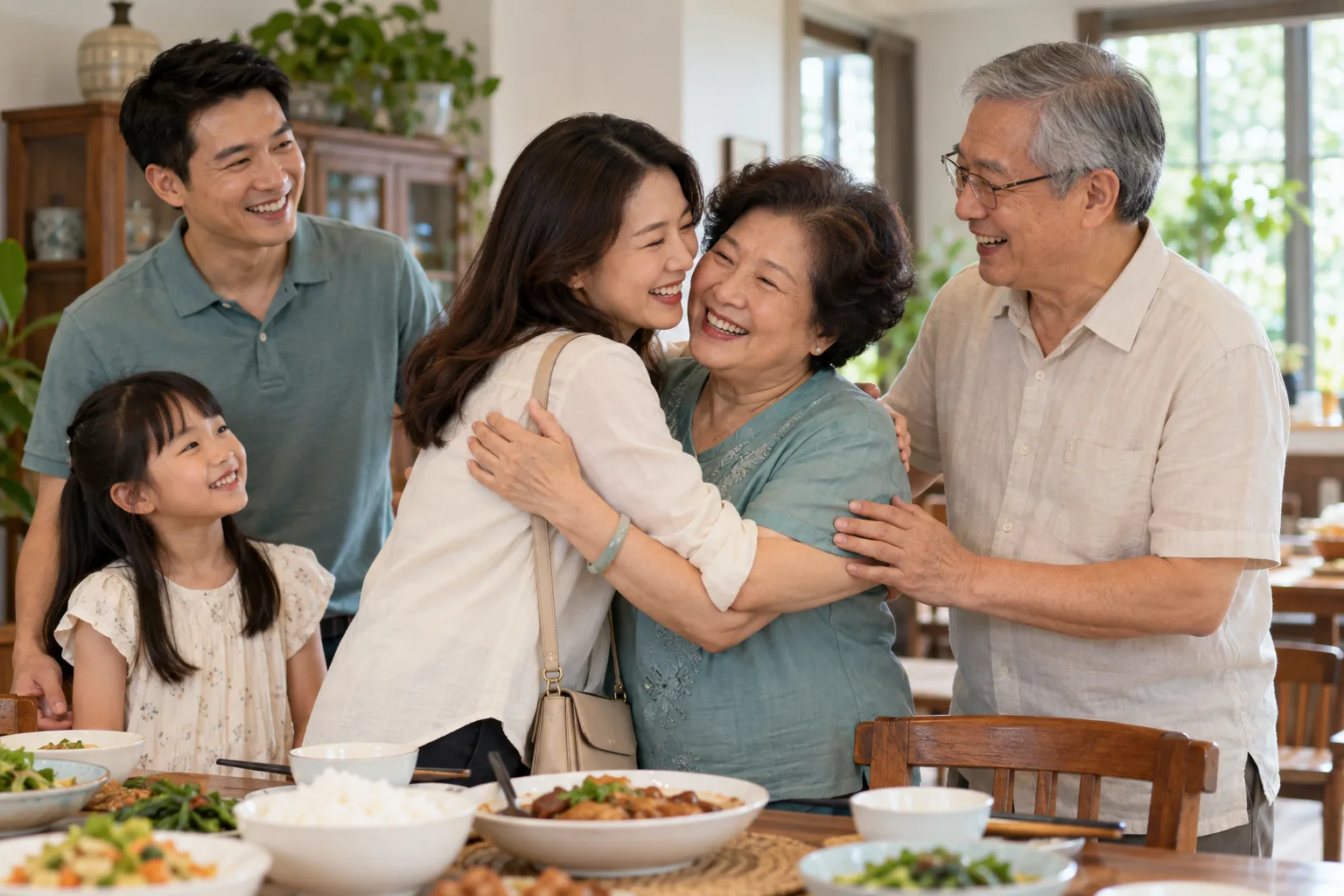
Family gathering photography records who was there, how they treated each other and the moments the hosts care about, without turning relatives into a queue of poses. Remembrance occasions need more care: the hosts decide what may be photographed, by whom and when. Start by telling us the purpose of the day and the relationships that matter most, and we propose coverage that fits.
A family gathering is not a staged event. Nobody is waiting for a programme item, and the most valuable photographs are often of a grandmother listening to a grandchild, or two cousins laughing in a corridor. Good coverage for this kind of day starts with understanding the family, not with a shot list.
This page is the starting point for hosts planning a reunion, a family celebration or a private remembrance. If your occasion is a milestone for one adult, see adult milestone-event photography. The pages below cover gatherings where the whole family is the subject.
Who commissions family gathering photography?
Hosts planning family photography usually fall into one of three groups. The first is the family organiser, usually the relative who booked the venue, contacted everyone and carries the plan. The second is an elder or a household head who wants a record but will not manage the details. The third is a relative living abroad who arranges photography for a gathering they cannot fully attend.
Each has a different worry. The organiser fears missing someone important. The elder fears fuss. The relative abroad fears a set of formal photographs that look nothing like the family. A conversation at the start should bring out which of these applies, because it changes how our team works.
It also helps to separate the person paying from the people being photographed. Our guide to separating the payer, organiser and subject of a booking explains how to keep the brief clear when these are different people.
Which occasions fall within this cluster?
Family gatherings come in many shapes. These are the main groups we plan for:
- Reunions. Extended-family reunions, including those that bring several generations together or relatives who attend only briefly.
- Reunions with a particular shape. A weekend away, a gathering organised from several countries, or an adult siblings' reunion.
- Shared spaces and stories. A reunion in an ancestral home, or a family-history project.
- Meals and celebrations. A private meal for visiting relatives, or several milestones at one gathering.
- Remembrance. Private memorial services, funeral-wake requests and annual remembrance gatherings.
Named faith observances sit in their own sections, such as Muslim family and faith occasions, and child-focused parties are in baby and child celebration photography.
What decisions shape the coverage?
Four decisions matter more than any equipment or package choice.
Purpose. A reunion held because a grandparent is unwell is a different job from one held every Hari Raya. The purpose tells our photographer where to spend attention.
Relationships. A family of sixty people has perhaps six relationships that the hosts truly want recorded. Examples are a father with his brothers, a grandmother with her youngest grandchild, two sisters who rarely meet. Naming them is more useful than a list of every attendee. The priority photograph list builder helps you write them down.
Timing. Who arrives when, who leaves early and when the family is together all at once decides the coverage window. Our guide to choosing when coverage should start and finish explains how to work this out.
Boundaries. Prayers, private conversations, children who are shy and relatives who dislike cameras all need an agreed approach before the day. This is where family photography differs most from a commercial event.
How do group photographs fit in?
Most families want at least one photograph of everyone together, and often several smaller groups: each household, each branch, each generation. These are best planned, because a large family can take a long time to gather.
Our team can suggest a short sequence for group photographs and agree the order beforehand, so that elders and young children are photographed early and no one stands waiting. The group photograph planner lets you draft the list. Where relationships are complicated, family group photographs when relationships are complicated offers ways to handle it kindly.
What about candid moments?
Candid photographs depend on trust. When our photographer is introduced to the family, told who is who and given permission to move through the space, the pictures look natural. If our photographer is treated as an outsider, the pictures show only polite smiles.
We encourage hosts to introduce our photographer to the eldest relatives and to the person in charge of the food. People then understand why a camera is nearby, and the gathering continues around it.
What drives the cost?
Coverage length, the number of photographers, travel, and the amount of editing and delivery all affect a quotation. Spread-out events, such as a weekend reunion, can cost more than a single afternoon because of the hours involved. Your written quotation states the coverage window, crew and deliverables. For help understanding the factors, read what drives event photography prices.
How do we plan and confirm it?
We read your brief, ask what is missing, and propose a coverage plan. We then confirm the date, venue, crew assigned, deliverables and quotation in writing before the booking is final. For family occasions, we also ask who should receive the photographs and how they may be shared, since this is a topic on which relatives often differ. Our guide to private gallery access and onward sharing sets out the questions.
Where the occasion involves bereavement, a ceremony or a place of worship, we follow the family's direction and the rules of the venue or the person leading the occasion. We confirm those arrangements before the day. Photography at an emotionally difficult gathering describes the approach.
Questions to answer before you enquire
- What is the gathering for, in one sentence?
- Which relationships or small groups matter most?
- Will elderly relatives, babies or people with access needs be present?
- Are there moments, rooms or people that should not be photographed?
- Who can answer questions on the day?
- Who may receive the photographs afterwards?
If you can answer even half of these, we can propose coverage that suits your family. You can also use the event photography brief builder to collect the answers before you write to us.
How does a professional compare with a relative's phone?
At a reunion, someone in the family usually takes photographs already. This table shows the usual differences.
| Question | Relative with a phone | Professional coverage |
|---|---|---|
| Can the relative who usually holds the camera be in the photographs? | Rarely | Yes, because our photographer takes the pictures |
| Group photographs of sixty people | Chaotic and slow | Planned order, short wait |
| Candid moments between relatives | Depends on who is nearby | Followed through the day |
| Elders and young children | Easy to miss | Planned early |
When a different option suits you better
A short gathering of a few close relatives is often better served by a brief family portrait session than by coverage of the whole afternoon. A candid-led approach suits a relaxed reunion, while posed family groups suit a formal photograph for the family wall. Many families choose a mix, with candid coverage and a short sequence of groups.
A weekend reunion or a gathering across several places suits extended-family reunion coverage, and coverage for a remembrance is planned around the family's direction. Our group photograph planner helps you decide how many groups you need, and whether you need a professional photographer can help if you are unsure. When you are ready, send us the date, the venue and a few lines on who is coming, and we will propose coverage.
Checklist
- Write one sentence on why the family is gathering.
- Name the three to five relationships you most want recorded.
- Decide who is the single contact for photography decisions.
- List any people, spaces or moments that should not be photographed.
- Ask the venue or the person leading the occasion about photography rules.
- Agree who may receive and share the finished photographs.
Tell us what the gathering is for, who must be in the record and anything the family would prefer left unphotographed. We will suggest private coverage and confirm the plan in writing.
Discuss your family gatheringExplore: Reunions and remembrance
29 pages- Big family reunion photography
- Family reunion photos with several generations
- Reunion photos when some relatives stay briefly
- Weekend family reunion photography
- Planning family reunion photos from abroad
- Adult siblings reunion photography
- Cousins' gathering photography
- Family reunion photos in the family home
- Family history gathering photography
- A family celebration during a shared holiday
- Farewell gathering before a family home sale
- A gathering to introduce a new family member
- Several family milestones at one party
- A private meal for visiting relatives
- Family picnic photography
- A family barbecue celebration
- A family gathering aboard a chartered boat
- A family gathering in a members-only venue
- A family storytelling and memory-sharing gathering
- A remembrance tribute within a family reunion
- Private memorial-service photography
- Funeral-wake photography requests
- Photographs at a burial or cremation farewell
- Ash-scattering ceremony photography
- Annual family remembrance gatherings
- Sharing photographs with a bereaved family
- Blended family and stepfamily gathering photos
- Recreating an old family photograph at a reunion
- Choosing the family's photographs from a reunion
Common questions
Who should make the decisions about photography in a large family?
Choose one or two people to speak for the family on photography: the organiser and, if the gathering is led by an elder, a trusted relative close to them. They confirm the priorities, the people who must appear and anything to avoid. Without a named contact, requests from different relatives can contradict each other on the day.
Can we ask for some parts of the gathering not to be photographed?
Yes. Prayers, private conversations, a difficult speech or a quiet meal can all be left out. Say so before the day, and agree a simple signal so the host can pause photography without explaining to anyone. Our photographer then keeps a respectful distance until told otherwise.
What if some relatives do not want to be photographed?
Their wish comes first. Ask the host to tell us in advance, so our photographer can keep those relatives out of frame or limit the images to what they agreed. Where it is a group photograph, a relative can also step aside without any comment.
Is a remembrance occasion treated differently from a celebration?
Yes. The family decides whether photography is wanted at all, which parts are suitable and who sees the images. We ask what is appropriate, follow the family's customs and any direction from the person leading the occasion, and confirm the approach in writing.
Can the photographs be shared with relatives who live abroad?
That is a common reason families hire a photographer. Agree beforehand who receives the gallery and whether relatives may download or share onward, because family members may have different views on privacy. Your quotation records how delivery and access are arranged.
Should we choose candid coverage or posed family groups?
Many families choose both. Candid coverage records how relatives really are together, while a short sequence of posed groups gives you the formal photograph for the family wall. Tell us which matters more and how many groups you need, and we suggest a balance and confirm it in writing.
Discuss your family gathering
Tell us what the gathering is for, who must be in the record and anything the family would prefer left unphotographed. We will suggest private coverage and confirm the plan in writing.
What happens next: You send your event details on WhatsApp. Our team reads the brief, asks what is missing, then confirms in writing whether the date, venue and coverage can be booked, with a quotation. Opening WhatsApp does not send anything, and a message is not a booking until both sides confirm.
Last reviewed: